Category Archives: Bookkeeping

Unit of Production Method: Definition and Calculation

units of production depreciation

Depreciation expense is a calculation of the portion of your asset that has been considered consumed in the current period. Now that we have gone over some of the important key terms, we can start to explain the formula used for the unit of production method and how it may be useful to your business. This method of calculating the value of an asset’s depreciation is different from other methods that determine the life of an asset-based on the number of years it has left as its useful life.

units of production depreciation

What Is the Unit of Production Method?

units of production depreciation

An asset acquired on 5th Jan at the cost of $ has estimated the use of hours. The difference between MACRS and units of production creates a lot of implications, especially in the reporting of deferred tax figures. Be sure to look into bonus depreciation and the Section 179 deduction, which lets qualifying businesses deduct the entire cost of many assets in the year of purchase. To illustrate, assume that the equipment described above is estimated to produce 120,000 units over its useful life. It is suitable for calculating depreciation on assets such as delivery trucks and equipment for which substantial variation in usage occurs.

Time Value of Money

This method’s selection is critical because we need to keep track of each asset and its production. So before selecting this method, please ensure everything is in control; otherwise, it will be challenging to use. You may export this report to Excel and fill in the blanks with the information you’ll need to generate your depreciation schedules. Keeping track of all your documents is always vital, but you may need them if you elect to have your financial accounts audited or examined by a CPA. Be careful to maintain track of any receipts, titles, contracts, or other documentation that verify you own the asset in addition to depreciation. The purchase date and the price you paid for the item should be included in these records.

What is Unit of Production Depreciation?

They will also reduce the book value of your assets on your balance sheet by the same amount. With sales taxes, delivery fees, and setup fees, the total of your WidgetMaker 3000 purchase comes to $11,500. It provides depreciation for each asset based on its production efficiency.

  • Danielle Bauter is a writer for the Accounting division of Fit Small Business.
  • For the example computations, the units of production depreciation method necessitate the cost base, salvage value, projected usable life, total expected lifetime production, and actual units produced.
  • Thus, the Units of Production method are appropriate for this type of asset.
  • Depletion and amortization are similar concepts for natural resources (including oil) and intangible assets, respectively.
  • The units of production depreciation technique is used in two instances below to compute depreciation for fixed assets.

Unit of Production Method Definition How Depreciation is Calculated

If you are a business owner with depreciating assets, you’ll want to be familiar with the term, unit of production method, or the units of activity method. You’ll likely overhear this type of language when dealing with your accountant, as it is commonly used for bookkeeping or tax purposes . A good example would be manufacturing machinery or a t-shirt printing machine. Each one of them has a pretty well-defined estimate on the practical usage to be expected during a period of time.

Units of Production Depreciation Method, also known as Units of Activity and Units of Usage Method of Depreciation, calculates depreciation on the basis of expected output or usage. Billie Anne started Pocket Protector Bookkeeping in 2012 to provide an excellent virtual bookkeeping and managerial accounting solution for small businesses that cannot yet justify employing a full-time, in-house bookkeeping staff. And you also know a properly maintained WidgetMaker 3000 is expected to produce 90,000 Widgets during its lifetime. Explore how Unit of Production Depreciation is calculated, its comparison with other methods, and its impact on financial statements and industry applications.

units of production depreciation

  • This method spreads the cost of an asset evenly over its useful life, making it straightforward to calculate and predict.
  • Since the units of production depreciation method uses the actual production levels of an asset to record deprecation expense, depreciation expenses can vary from year to year.
  • This means your tax depreciation won’t line up exactly with your book depreciation, but as long as you are aware of this and know why the two amounts don’t match, it won’t cause a problem.
  • It provides depreciation for each asset based on its production efficiency.

Units of production depreciation is one of four types of depreciation you can use for managerial accounting purposes. This depreciation method helps you calculate how to reduce the value of a fixed asset in your business based on the number of units What is partnership accounting it produces in a given period of time. If the estimated number of hours of usage or units of production changes over time, incorporate these changes into the calculation of the depreciation cost per hour or unit of production. A change in the estimate does not impact depreciation that has already been recognized. Therefore, a change in estimate does not alter the financial statements for prior periods.

Track this amount each year, and never let it exceed the original depreciable value of the https://www.pinterest.com/bountysoul/share-the-post-make-money-with-blogging/ asset, which is $38,000 ($40,000 – $2,000). Once accumulated depreciation reaches $38,000, the asset is fully depreciated, and any additional units produced do not generate any depreciation expense. If in such a situation the results of using the records are materially different from those achieved under a time-related method, the firm might use the units of output or units of production method to compute the depreciation expense.

How to Calculate Units of Activity or Units of Production Depreciation

units of production depreciation

Most businesses understand depreciation from a tax perspective but it’s equally important in the accounting world. Depreciation reflects the cost of usage of assets and needs to be taken into consideration when presenting profit or loss and performance of a company. There are many ways of depreciating assets and the unit of production is one of them. One of the beauties of the units of production depreciation method is you can calculate depreciation with as much detail as you desire. Many businesses will still calculate depreciation on a yearly basis, but you might choose to calculate depreciation quarterly or even monthly.

units of production depreciation

What is the Unit of Production method?

units of production depreciation

Cost generally is the amount paid for the asset, including all costs related to acquiring and bringing the asset into use.8 In some countries or for some purposes, salvage value may be ignored. The rules of some countries bookkeeping and payroll services specify lives and methods to be used for particular types of assets. However, in most countries the life is based on business experience, and the method may be chosen from one of several acceptable methods. The decrease in the value of an asset over its lifetime is known as depreciation. In accounting terms, that means spreading the cost of an asset over a specific period of time. The cost accountants at West believe the salvage value of the machine is $20,000 and the machine will produce 20,000 units during its useful life.

Step 1: Calculate Unit Production Rate

units of production depreciation

11 Financial’s website is limited to the dissemination of general information pertaining to its advisory services, together with access to additional investment-related information, publications, and links. Finance Strategists has an advertising relationship with some of the companies included on this website. We may earn a commission when you click on a link or make a purchase through the links on our site. All of our content is based on objective analysis, and the opinions are our own.

Example of Units of Production Depreciation Calculation for Multiple Years

units of production depreciation

Since this method of depreciation is based on physical output, firms apply it in situations where usage rather than obsolescence leads to the demise of the asset. Under this method, you would compute the depreciation charge per unit of output. Then, multiply this figure by the number of units of goods or services produced during the accounting period to find the period’s depreciation expense. Under the units of production method, the amount of depreciation charged to expense varies in direct proportion to the amount of asset usage.
  • The diagram below sets out an analysis of the units of production depreciation method.
  • So before selecting this method, please ensure everything is in control; otherwise, it will be challenging to use.
  • QuickBooks Online generates a chart of accounts depending on the industry you choose when you first started using the program.
  • The units-of-production depreciation method assigns an equal amount of depreciation to each unit of product manufactured or service rendered by an asset.
  • When you expense an asset depending on its use, you might get a more accurate and timely view of its value loss.

Then, multiply that quotient by the number of units used during the current year. Depreciation expense for a given year is calculated by dividing the original cost of the equipment less its salvage value, by the expected number of units the asset should produce given its useful life. Then, multiply that quotient by the number of units (U) used during the current year.

  • Units of Activity or Units of Production depreciation method is calculated using units of use for an asset.
  • The method first computes the average depreciation expense per unit by dividing the amount of depreciable basis by the number of units expected to be produced.
  • Chartered accountant Michael Brown is the founder and CEO of Double Entry Bookkeeping.
  • This method ties depreciation directly to the usage or output of an asset, making it particularly relevant for industries where equipment wear and tear are closely linked to operational activity levels.
  • And in years 5 and 6, MACRS depreciation drops significantly, while units of production depreciation continues based on actual usage.
  • Units of Production Depreciation is the amount of depreciation that an asset (or sometimes company) has taken over time.
  • Greater deductions are often taken for depreciation in years when the asset is heavily used, which offsets periods when the equipment experiences less use.
  • What conspired this was that multiple large refineries overestimated their well’s lifetime value and underreported their depreciation.
  • We’ll first determine the units of production rate before calculating the yearly depreciation charges for the sewing machine.
  • Based on the formula above, depreciation expense can be calculated as frequently as desired by management as long as the information regarding the total units produced by the asset is available.
  • The units of production technique is based on the use of an asset rather than time.
  • Using the unit of production method for this type of equipment can help a business keep track of its profits and losses more accurately than a chronology-based method such as straight-line depreciation or MACRS methods.

By year 4, the accumulated depreciation for both methods is closer, and the differences start to reverse. During these years, the company will recognize the reversal of some of the previously recorded DTL, as book depreciation may begin to exceed tax depreciation. Accumulated depreciation is the sum of depreciation expenses over the current and all prior years.

When a company increases production for a specific financial year, it generally means the related sales are increasing which creates higher demand. With units of production, increasing production will also increase the depreciation expense since the asset is being used more frequently. In accounting, one of the main goals is to paint an accurate picture of a company’s financial situation. The units of production method help reflect the accurate picture of a company Accounting For Architects where revenues are dependent on production. The depreciation cost will be increasing along with usage and revenue rather than a timeline-based depreciation method where the depreciation expense has no relation with the usage of the asset. Time is usually a key component of how to calculate depreciation of an asset (as seen in the straight line or the accelerated methods).

11 Tips to Improve Cash Flow for Your Business

the best way to avoid cash flow problems is

Reducing overhead costs can make a long-term difference to the profitability of your business and its cash flow. A Kabbage survey found that 84% of small business owners reach profitability within the first four years of their business. Bookkeeping for Chiropractors It can take time to build a profitable business and nearly one-third of businesses won’t hit that milestone in the first year.

the best way to avoid cash flow problems is

Withheld investment or funds

Alternatively, you can try to speed up your operational processes to generate more yearly cash flow cycles. Whether you have a forecasted cash flow shortage or surplus, smart business owners build cash retained earnings flow contingency plans into their annual budgets. Successful cash flow management requires you not only to pay attention to your current cash flow statements but also to your cash flow’s forecasted future.

  • By strategically managing payables, businesses can free up working capital while maintaining trust and flexibility with suppliers.
  • It can be difficult to predict bad debt, but cash flow protection is possible.
  • Building strong supplier relationships is essential for maintaining flexibility during cash flow challenges.
  • By identifying cash flow forecast problems and solutions, you can devise realistic options to manage your accounts.
  • Is there anything else your business can offer to sway a customer into purchasing from you apart from a cheaper price?
  • To help you avoid that fate, this article covers five common cash flow problems many entrepreneurs face and provides solutions to help get your finances back on track.
  • Knowing your numbers and recognizing a cash flow shortage as soon as (or even before) it occurs can help you act quickly to save your business from a catastrophic cash flow problem.

A better way to send and receive invoices.

Owing money the best way to avoid cash flow problems is isn’t necessarily a bad thing, but high interest rates can be detrimental to cash flow. A thorough plan outlining predicted cash flow on a monthly basis can help you avoid cash flow problems. This plan should be as precise as possible because your ability to forecast accurately will improve over time. Cash flow forecasting is based on payment terms with suppliers and the length of time it takes to get access to revenue.

the best way to avoid cash flow problems is

Spending Money You Don’t Have

A good credit control system is crucial to monitor and collect payments from customers. If a customer has a history of bad credit, consider asking for cash upfront to cover potential losses. You can also negotiate new payment terms with vendors to delay payments temporarily and then renegotiate the existing payment structure for the long term.

the best way to avoid cash flow problems is

This statement will show you how much cash you will have on hand at the beginning and end of each period, as well as your expected cash inflows and outflows for that period. On the other hand, if you know that you will have a cash deficit, you may decide to cut back on expenses or seek additional financing. When sales are lower than expected, a business will have less revenue coming and tighter bank balances. Not having a good read on how much money you have and how much money you will have in the near future and distant future is the reason why many businesses lose control and close their doors.

the best way to avoid cash flow problems is

The quickest way to turn a business idea into a business plan

the best way to avoid cash flow problems is

It’s much safer to hold back some capital to lessen your exposure to risk. Good management of your inventory can seem like a balancing act at times, and while holding too little stock can lead to plenty of problems, having too much can be even more dangerous. Even items that can be moved on quite easily can provide issues should unforeseen events take place. Take a look at this case study of one of our clients for an example of how you can quickly become overexposed to a risk you hadn’t considered beforehand. There are a multitude of factors that can cause cash flow problems, and the following list is just a snapshot of the main offenders.

7 Strategies for Surviving a Cash Flow Crisis

the best way to avoid cash flow problems is

Before you take on business debt, however, be sure you understand the interest rates and have considered all other options. Be sure you are not making a decision that will simply kick the problem down the road to be addressed at a later date. You will need to know your current cash balance, as well as your expected cash inflows and outflows. It’s the best way to the best way to avoid cash flow problems is avoid cash flow problems as you go forward with your small business. If you have any of the following cash flow issues, you need to identify the problem and implement steps to fix them right away. Cash flow is one of the most important financial metrics for a business.

  • While this can seem like an unavoidable part of business to some, there are some simple steps you can take to make these instances less likely.
  • Looking at last year’s sales should give you a good idea of what you will make this year.
  • Business.com aims to help business owners make informed decisions to support and grow their companies.
  • You will need to know your current cash balance, as well as your expected cash inflows and outflows.

Unexpected (and uninsured) expenses

For instance, you might underestimate the costs of launching your business or how quickly it will take for the company to begin turning a profit. Invoicing clients—and waiting for those invoices to get paid—can create a cash flow nightmare. For companies with cash flow difficulties, getting paid quickly is important. When it comes to payday, however, you don’t have the cash to cover their wages, as you haven’t received your first payment from the new client. If your overhead costs are too high, your small business is going to experience cash flow problems.

How to Fix Cash Flow Problems in a Small Business

We research and recommend products and services suitable for various business types, investing thousands of hours each year in this process. And automation—particularly accounts receivable automation—can help you achieve those tasks. Beyond using analytics to understand what is currently happening with your business, you should invest in forecasting software to better predict what will happen with your business. The right tools can digest your business data to identify patterns beyond human perception, providing new insights. Instead, successful companies need agility, adaptive strategies, marketing efforts, and growth plans that conform to the realities on the ground.

the best way to avoid cash flow problems is

Create a professional business plan

the best way to avoid cash flow problems is

Lowering expenses is a relatively simple-sounding way to address cash flow law firm chart of accounts problems in your business. A cash flow forecast is also a great resource to help you make important decisions, such as when to make a capital expenditure, or whether or not to cut an expense. This means that you only have to pay interest to the bank for the amount of time you actually need the cash. It’s also worth looking at your staff and premises to determine if both are suitable for your business needs. Too much staff, or too large a premises can put undue strain on a business very quickly, and soon hit your cash flow. Many of the major high-street casualties in the UK have been chains that still operated in sprawling stores that brought giant heating, lighting, and rent fees along with them.

the best way to avoid cash flow problems is

But, thankfully, there are ways income statement to resolve issues so your business can stay in control and on the path to lasting success. Even if invoices are paid, money may take some time to hit your account due to delays in payment processing. Cash Flow Frog is your one-stop-shop for accurate cash flow management.

  • Even a 10% discount can be enticing enough to get customers to pay quickly.
  • By streamlining receivables and encouraging fast payments, businesses can maintain healthy cash flow and reduce reliance on short-term financing.
  • Those based in an affluent area can afford to charge more for the same services than a similar business based in a struggling neighbourhood.
  • Even with proper insurance in place though, you’ll still need a suitably sized reserve to last until your insurance provider pays out on your claim.
  • Eliminate all unnecessary expenses and only spend on the costs that keep you operational and generate revenue.
  • On a fundamental level, cash flow problems occur when a business has too many expenses without enough revenue.
  • With effective cash flow monitoring, businesses can confidently plan for growth, minimize risks, and maintain financial flexibility through fluctuating market conditions.

Role of a Purchase Order PO in the Procurement Cycle in Thailand

steps in the accounting cycle

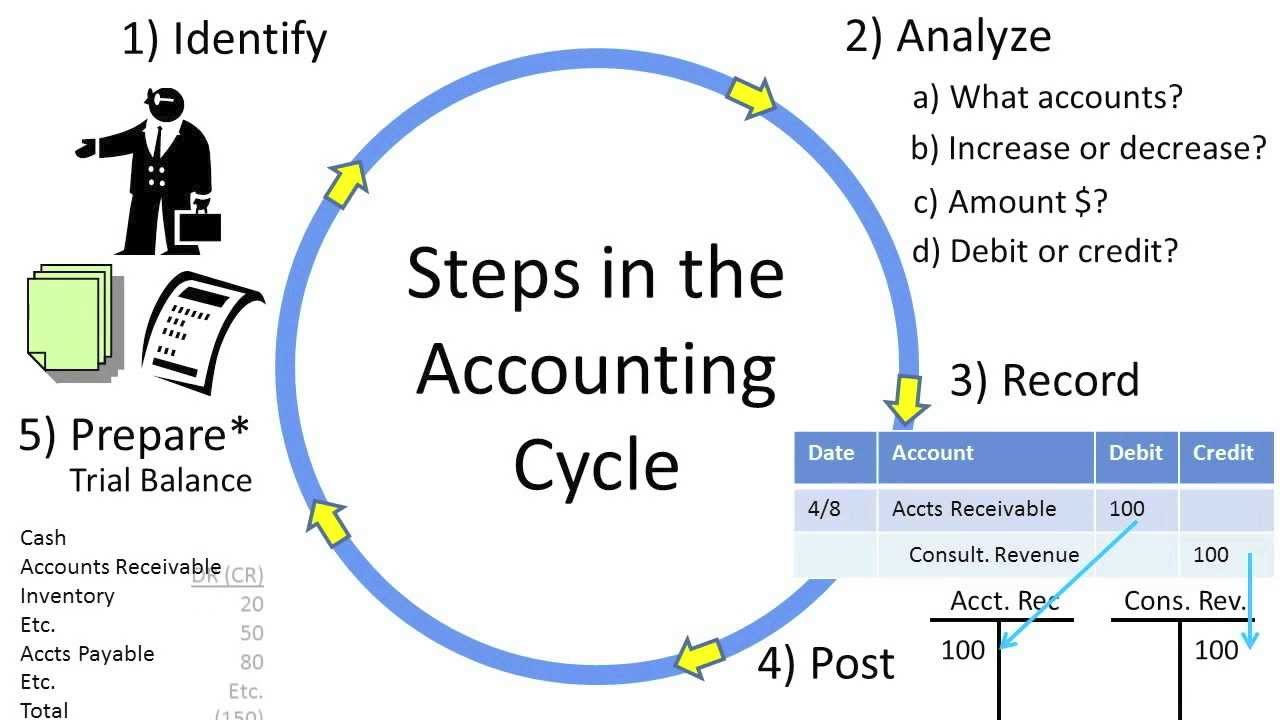
Overall, determining the amount of time for each accounting cycle is important because it sets specific dates for opening and closing. Once an accounting cycle closes, a new cycle begins, starting the eight-step accounting process all over again. A business can conduct the accounting cycle monthly, quarterly or annually, depending on how often the company needs financial reports.

Preparation of unadjusted trial balance

Closing accounts is the last step, where you have to close all temporary accounts such as expenses and revenues (mostly income statement items) to retained earnings and owner’s equity account. This is very essential step to restarting your accounting cycle for the next accounting period. The seventh step requires to prepare financial statements including the income statement, balance sheet, Statement of Retained Earnings, and cash flow statement.

Using financial insights to maximize your business potential

  • This is crucial to provide accurate financial statements and ensure that the company’s accounts accurately reflect its financial position.
  • There’s also a higher chance of human error—when you’re recording and transferring thousands of transactions in your books, it’s possible you’ll mistype a transaction amount or skip a transaction.
  • At the core of HighRadius’s R2R solution lies an AI-powered platform catering to diverse accounting roles.
  • The accounting cycle focuses on historical events and ensures that incurred financial transactions are reported correctly.
  • Meanwhile, cash accounting involves looking for transactions whenever cash changes hands.

HighRadius Autonomous Accounting Application consists of End-to-end Financial Close Automation, AI-powered Anomaly Detection and Account Reconciliation, and Connected Workspaces. Delivered as SaaS, our solutions seamlessly integrate bi-directionally with multiple systems including ERPs, HR, CRM, Payroll, and banks. Companies might employ multiple accounting periods, but it’s crucial to note that each period solely reports transactions within that time frame. If the accounting period extends to a year, it is also termed a fiscal year. Publicly traded firms, mandated by the SEC, submit quarterly financial statements, while annual tax filings with the IRS necessitate yearly accounting periods. The accounting cycle provides a framework for recording transactions and checking them for accuracy before they make it to the financial statements.

Order to Cash

If these errors aren’t caught and corrected, they can give you and your employees an inaccurate view of your company’s financial situation. A business starts its accounting cycle by identifying and gathering details about the transactions made during the accounting period. When identifying a transaction, you’ll need to determine its impact.

Record, Report, Repeat

steps in the accounting cycle

If you use accrual accounting, you’ll need to match revenue and expenses. The process starts with recording individual transactions and ends with creating a summary (financial statements) of the company’s financial affairs during a specific period. The accounting cycle is a set of steps that are repeated in the same order every period.

Step 4: Unadjusted Trial Balance

Utilizing the services of skilled bookkeepers and accountants ensures that businesses stay on track and make informed decisions throughout the accounting cycle. During the accounting cycle, many transactions occur and are recorded. At the end of the fiscal year, financial statements are prepared (and are often required by government regulation).

Throughout this section, we’ll be looking at the business events and transactions that happen to Paul’s Guitar Shop, Inc. over the course of its first year in business. Some textbooks list more steps than this, but I like to simplify them and combine as many steps as possible. Not sure where to start or which accounting service fits your needs? Our team is ready to learn about your business and guide you to the right solution. You might find early on that your system needs to be tweaked to accommodate your accounting habits. He’s a co-founder of Best Writing, an all-in-one platform connecting writers with businesses.

Adjustments include the recording of depreciation expense, the gradual release of prepayments, and the recording of earned revenue from unearned revenues at the end. When you record all transactions in the general journal, now, is the time to post these all transactions in the appropriate T account (General Ledger). The software auto-generates financial statements so you can directly close your books at the end of the reporting period.

Ultimately, understanding and executing the accounting cycle properly empowers you to steer your business toward greater financial stability. The balance sheet and income statement depict business events over the last accounting cycle. A cash flow statement, while not mandatory, helps project and business boost centre track your business’s cash flow. Your accounting type and method determine when you identify expenses and income. For accrual accounting, you’ll identify financial transactions when they are incurred. Meanwhile, cash accounting involves looking for transactions whenever cash changes hands.

Once the supplier collects the cheque at the finance department, they sign on a cheque register and provide receipts as evidence of payment. The finance department then stamps the documents with a ‘Paid’ designation to prevent duplicate payments before returning them to accounting for record-keeping. The purchase order, on the other hand, is an external document sent to suppliers, typically created and approved by the purchasing department to order equipment, items, or products for the company. The purchase requisition (PR) is used internally within the company to maintain good internal control systems. She is a Xero Advisor Certified and Remote Account Assistant, where she prepare monthly financial reports for the clients. She is a highly motivated and detail-oriented individual with a passion for learning.

Balance Sheet Definition, Example, Formula & Components

sample balance sheet

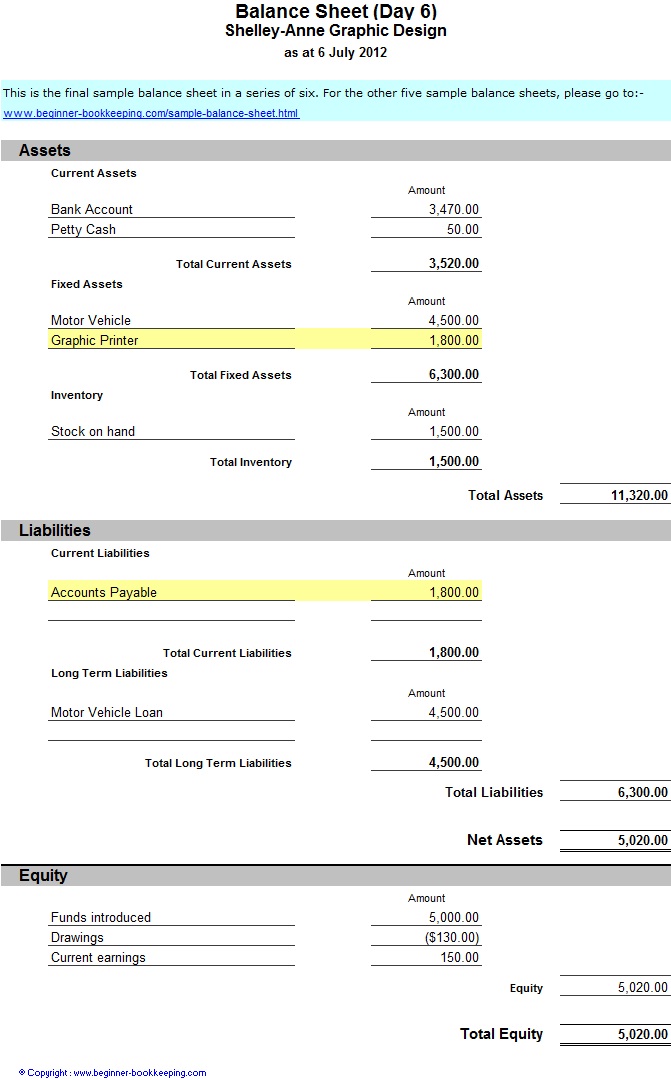
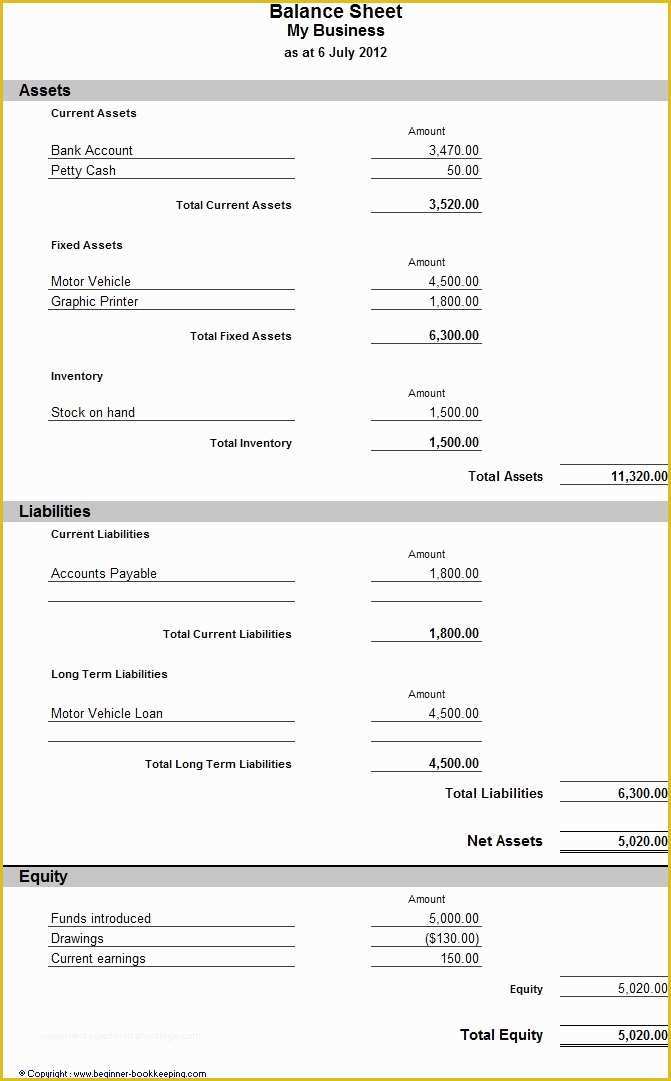
It is crucial to note that how a balance sheet is formatted differs depending on where the company or organization is based. As you can see, it starts with current assets, then the noncurrent, and the total of both. Like assets, liabilities can be classified as either current or noncurrent liabilities. Noncurrent assets include tangible assets, such as land, buildings, machinery, and equipment.

Add Total Liabilities to Total Shareholders’ Equity and Compare to Assets

Without knowing which receivables a company is likely to actually receive, a company must make estimates and reflect their best guess as part of the balance sheet. Assets, liabilities, and stockholders’ equity are three features of a balance sheet. For this example, we’ll use this hypothetical balance sheet of ABC Company, an industrial manufacturer. The table below summarizes the company’s assets for the past two year-end periods.

Balance Sheets Secure Capital

The balance sheet is a report that gives a basic snapshot of the company’s finances. This is an important document for potential investors and loan providers. The data keep ghosts off the payroll and information included in a balance sheet can sometimes be manipulated by management in order to present a more favorable financial position for the company.

Forensic Accounting Summit Q&A

  • Most of the information about assets, liabilities, and owners’ equity items is obtained from the adjusted trial balance of the company.
  • We accept payments via credit card, wire transfer, Western Union, and (when available) bank loan.
  • This could signify financial trouble if the debt is not being paid back.
  • To judge leverage, you can compare the debts to the equity listed on your balance sheet.

External auditors, on the other hand, might use a balance sheet to ensure a company is complying with any reporting laws it’s subject to. Typically, a balance sheet will be prepared and distributed on a quarterly or monthly basis, depending on the frequency of reporting as determined by law or company policy. If a company or organization is privately held by a single owner, then shareholders’ equity will be relatively straightforward.

What Is A Balance Sheet? (Example Included)

sample balance sheet

The Balance Sheet and Profit and Loss Statement are essential reports for understanding your business’s financial health. You should review these reports regularly to ensure your company is financially stable. It lets you see a snapshot of your business on a given date, typically month or year-end.

Calculating the change in assets of a company

This document gives detailed information about the assets and liabilities for a given time. Using these details one can understand about company’s performance. By analysing balance sheet, company owners can keep their business on a good financial footing. This includes debts and other financial obligations that arise as an outcome of business transactions. Companies settle their liabilities by paying them back in cash or providing an equivalent service to the other party.

The assets should always equal the liabilities and shareholder equity. This means that the balance sheet should always balance, hence the name. If they don’t balance, there may be some problems, including incorrect or misplaced data, inventory or exchange rate errors, or miscalculations. The NERF measures available stable resources after financing fixed assets. A negative NERF, on the other hand, suggests a potential financial risk requiring corrective measures such as a capital increase or recourse to long-term debt.

Depicting your total assets, liabilities, and net worth, this document offers a quick look into your financial health and can help inform lenders, investors, or stakeholders about your business. Based on its results, it can also provide you key insights to make important financial decisions. These provide additional information pertaining to a company’s operations and financial position and are considered to be an integral part of the financial statements. Balance sheets can be used to analyze capital structure, which is a combination of your business’ debt and equity. Lenders will factor them into their decisions when doing risk management for credit.

On the other hand, long-term liabilities are long-term debts like interest and bonds, pension funds and deferred tax liability. Unlike the asset and liability sections, the equity section changes depending on the type of entity. For example, corporations list the common stock, preferred stock, retained earnings, and treasury stock. Partnerships list the members’ capital and sole proprietorships list the owner’s capital. In both formats, assets are categorized into current and long-term assets.

This could signify financial trouble if the debt is not being paid back. The balance sheet is organised into distinct sections, each displaying the total of corresponding accounts along with their respective sub-accounts and balances. This structured layout enhances readability and provides a clear overview of the totals for each account.

Maximizing profitability through efficient accounts receivable management in law firms

Optimizing Accounts Receivable Management in Law Firms

Digital payments are also easy to schedule in advance, making it easy to set up future or recurring payments. Electronic invoices also help firms save costs, by eliminating time spent on preparing bills and reducing the use of paper and stamps. It’s easier for clients to pay their bills—meaning firms get paid for their hard work without needing to constantly chase up. Below, we explore these areas in detail and outline how to improve the accounts receivable process at your law firm with Clio Manage. Clients may delay processing payments when there is confusion regarding the services rendered. To avoid such issues, make sure your invoices are clear, concise, and detailed.

Automate Invoicing and Reminders

Optimizing Accounts Receivable Management in Law Firms

Access your firm’s click-to-pay link by selecting New charge from the Online payments tab before clicking the Copy payment link. Then, paste this link in outgoing communications, add it to your website, or save it to your bookmarks to use as needed. By integrating TimeSolv into your operations, your firm can streamline payment processing, boost profitability, and drive stronger financial outcomes that get you closer to achieving zero AR.

Promptly Follow up on Overdue Payments

This guide covers the main challenges of managing a law firm’s accounts receivables and steps to improve Accounting for Churches your process. Most lawyers don’t get into law expecting to tackle accounts receivable management. However, nearly every firm needs to address unpaid client bills at some point.

  • Here are some best practices around determining when and how to write off invoices that are very unlikely to get paid.
  • These effective law firm accounts receivable strategies can transform your financial landscape.
  • Whether buying groceries or big-ticket items, consumers have become accustomed to selecting from various payment options.
  • Think of it as those unpaid invoices that are just waiting to be settled.
  • Regularly update your client about their legal matter’s progress, any works in progress, and the corresponding fees for each milestone you’ve achieved.
  • Accounts receivable (AR) represents the total amount of money clients owe to the law firm for services provided but not yet paid.
  • Old Richmond Township, NC housing market in November 2024 saw over 3 listings sold above listed price, more than 0 sold at listed price and over 2 sold below.

Establish a Consistent Billing Schedule

Optimizing Accounts Receivable Management in Law Firms

Managing payments, remembering to send reminders, and constantly following up with clients can add up to a significant amount of non-billable law firm accounts receivable management work. Instead, you can set up automated reminders as the next billing date approaches. Despite your best efforts, law firm collections aren’t always smooth sailing. Some clients may still struggle to make payments, refuse to pay, or file a chargeback if they disagree with the charges. Encouraging early payments can accelerate cash flow and improve your collections process.

Legal Industry Report

MyCase will send invoice reminders automatically, so you don’t have to follow up with every client to receive payment. You can also apply late fees automatically (if desired) to take one more task off your plate. Providing multiple payment methods can make it easier for clients to pay bills without requiring them to mail a check or visit your office.

Accepting credit card payments makes it easier for clients to pay bills. The American Bar Association’s Model Rules of Professional Conduct require attorneys to safeguard client property, including unearned fees. A high AR balance complicates this responsibility, increasing the risk of mismanaging funds or failing to deliver payments promptly. Afterward, utilize financial software for an overview of all accounts receivable debt owed to your firm. With a holistic overview of your firm’s performance and growth, you’re empowered to be proactive rather than reactive. Regularly evaluate metrics such as days in accounts receivable (DAR), claim denial rates and collection percentages.

Optimizing Accounts Receivable Management in Law Firms

For many firms, outdated processes and inefficient workflows slow down day-to-day law firm operations and take time away from high-value client work. Paystand is on a mission to create a more open financial system,starting with B2B payments. Using blockchain and cloud technology, wepioneered Payments-as-a-Service to digitize and automate your entire cashlifecycle. Our software makes it possible to digitize receivables,automate processing, reduce time-to-cash, eliminate transaction fees, and enable new revenue. To address these issues, they implemented Paystand’s AR automation platform, which streamlined invoicing, introduced a self-service payment portal, and automated payment updates in NetSuite.

Accounting Jobs of the Future: How Staffing Agencies Can Help Land Them

This allows the firm to maintain a steady cash flow and the entire team to focus more on delivering high-quality legal services to clients. Law firm billing software, like LawPay, can enforce a specific invoicing cadence, minimize billing mistakes, and send automatic payment reminders. Each of these actions build client confidence and improve your collection rate. Unfortunately, manual processes traditionally employed by law firms often struggle to address the unique challenges of legal A/R net sales management. Breaking payments into smaller, more manageable installments benefits both firms and their clients. If your client is facing financial troubles, you can further ease their burden through lawyer payment plans, where the client pays you in smaller, more manageable installments.

Automating Law Firm Accounts Receivables

Optimizing Accounts Receivable Management in Law Firms

By incorporating accounts receivable contribution margin collection best practices into your standard client management process, your firm can maintain better control over its financial health. By implementing a few key strategies around invoicing, collections, and write-offs, legal professionals can dramatically improve their accounts receivable management. Regular and timely billing is essential for maintaining a healthy cash flow. By establishing a consistent billing schedule, you create a routine that clients can anticipate.

Optimizing Accounts Receivable Management in Law Firms

The Dangers of Delayed Claims Processing: How to Speed Up Your A/R Cycle

This timeframe gives clients a reasonable window to make their payments while keeping your cash flow in check. Offering convenient payment methods is crucial if you want to get paid on time. Accepting checks only can limit your clients, resulting in delayed payments for a variety of reasons. Set up a system that enables clients to process payments online, accommodating different methods.

Ultimate Guide to Law Firm’s Accounts Receivable Management (Boost Profits & Reduce Risk)

Payment due dates vary from firm to firm—while some have 30-day payment due dates, others might be more lenient and extend this to 60 days. How to craft effective letters to build trust, set clear expectations, and enhance client relationships in bookkeeping. Automating invoice and payment reminder sends through software ensures consistency and timeliness.

  • Setting clear expectations, invoicing promptly, and collections efforts can help minimize unpaid bills.
  • Here are a few ways to help law firms optimize, reduce costs, and improve client satisfaction.
  • With just one click, you can send hundreds of invoices and receive payment directly on the same platform.
  • Do you want to master this process so it can significantly boost your cash flow?
  • These features give businesses visibility into overdue accounts and help prioritize follow-ups, leading to faster collections and improved cash flow.
  • CosmoLex has trust account solutions that keep you current, compliant, and automated.
  • Law firms work hard to provide top-notch legal services, but getting paid on time can sometimes take just as much effort.

A Better Way to Manage Your Law Firm’s Accounts Receivables

Clients who know what to expect are more likely to commit to paying for your services. A good client intake process for law firms can help you establish expectations early with prospective clients. Modern A/R management tools, like FinThrive’s A/R Optimizer, simplify processes, reduce administrative workloads and improve accuracy. Adopt systems that support credit card payments, bank transfers, digital wallets (such as PayPal or Apple Pay), and real-time payment methods. A recent study found that businesses offering multiple payment methods see a 15% improvement in payment timeliness. Automation simplifies the accounts receivable process as it doesn’t rely on the allocation of your time to happen.

Optimizing Accounts Receivable Management in Law Firms

Once this date has passed and the firm still hasn’t received what clients owe, they will then reach out to gently enquire/remind the client about their invoice. To meet your clients’ expectations, having an efficient A/R system isn’t just an option; it’s a necessity. This is where new strategies, innovation, and technology come into play – helping your firm stay ahead of the game and keeping your focus on the law, not finances. By streamlining A/R, your law firm can maintain healthy cash flow and ensure financial stability, keeping you focused on what truly matters.

Unlike many businesses that benefit from regular cash flow through repeat sales, law firms often rely on a mix of retainers, hourly fees, and contingency arrangements. This can create unpredictable cash flow, particularly when clients delay payments due to disputes or financial difficulties. It’s important to stay on top of accounts receivable since it represents revenue for your law firm.

Invest in comprehensive training programs for staff to help them become proficient in using your accounts receivable automation software. Whether you choose to bill monthly or upon reaching specific project milestones, consistency is key. Clio Manage’s Automated Accounting for Churches Bill Reminder feature enables you to track outstanding bills and automatically send outstanding Balances to clients and bill recipients based on a schedule. Follow up on all outstanding bills from one place—it couldn’t be simpler.

  • Receivables automation increases your efficiency and productivity, and takes away any extra costs such as printing that may go into manual accounts receivable methods.
  • Our MissionQuickFee helps professionals manage receivables and get paid for their work faster.
  • Your firm may face delayed payments due to client disputes, scope creep, or clients’ financial constraints.
  • You can automate as much or as little of the accounts receivable process as you like.
  • Ensure all contracts and invoices specify due dates, acceptable payment methods, and late payment penalties.

Optimizing Accounts Receivable Management in Law Firms

Having an option to pay online also encourages law firm accounts receivable management faster transactions and reduces common payment obstacles. The right collections technology reduces the manual workload for your firm by systematizing processes. This results in recovering more owed dollars and faster receivables turnover. Evaluating options that align with your budget and needs is key to see improvements.

Automation can make a big difference in how law firms handle accounts receivable, saving time and improving efficiency. By automating routine tasks like generating invoices, sending reminders, and tracking payments, your team can focus on higher-value work. Faster invoicing and timely follow-ups help ensure payments are received more quickly, keeping your firm’s finances on track. Automated reminders feel less intrusive than direct calls and allow you to maintain a friendly tone while still being professional. Implementing these strategies can transform your legal firm’s accounts receivable process from a headache to a well-oiled system. Next, let’s see how you can supercharge your accounts receivable management with exciting digital solutions.

Best Construction Accounting Software of 2024

bookkeeping software for construction companies

The next function layer is the Procore analytics feature that works with the specialized app marketplace filled with third-party solutions that integrate with Procore. This is best for contractors who want to integrate an accounting and project management platform with construction drawing and output. This is best for contractors who want clients to have access to cost data and project management oversight. When it comes to financials, the software offers bid management, change orders and purchase orders (POs). You can invoice clients and make payments directly from the app and monitor the budget to make sure you stay on track.

Sage 300 Construction and Real Estate (CRE)

The functionality is built around a general ledger and allows you to track your income, assets, expenses, and liabilities. INTERAC supports various billing formats, including AIA, T&M, free form, and contract billing, integrated into modules spanning both accounting and construction management. Last, it has extensive payroll features, supporting multi-state, multi-locality, prevailing wage, certifications, union contributions, and worker’s comp calculations. ComputerEase covers functions like AP, AR, bid day management, equipment costing, and estimating. Contractors can also use the FieldEase add-on for mobile and tablet devices to access task management tools. Though the interface is on the traditional side, Deltek continues modernizing the platform, including user-friendly entry screens and a dark mode to reduce eye strain.

bookkeeping software for construction companies

Payments

It’s a well-known tool that does the job well, provided you have the budget to pay for their service. Buildertrend also How to leverage construction bookkeeping to streamline financial control has the basic construction accounting software features you should expect, like job costing and project management. However, only the pricier Pro plan includes change orders and purchase orders. You also can’t track bids, warranties, or bills with the cheaper Core plan. Standout features include mobile tools that allow you to proactively manage jobs, inventory, finances, and people from any location.

How to choose construction accounting software

bookkeeping software for construction companies

Once you’ve narrowed down your list, the next consideration should be cost. Foundation breaks its software down into modules that you can put into a custom solution. Set up projects with the right budget set using the job costing module.

  • Construction accounting software can provide various financial reporting and analysis features to help you make informed decisions about your construction company’s finances and operations.
  • It’s one of the main reasons why, for so long, the construction industry may have struggled more than other sectors to migrate to digital systems.
  • Metadata enables tracking, allowing you to see when a report is sent, opened, printed, clicked, or responded to.
  • Construction accounting software pricing depends on several factors, such as the size of your business, how many total users you have, and what modules you want included.
  • This software needs to offer the basics like creating estimates and tracking job expenses.

bookkeeping software for construction companies

Prices can vary greatly depending on the kind of software you’re using, though most offer low-price plans to get started. Construction accounting software rates can start from as low as $17/month or up https://www.inkl.com/news/the-significance-of-construction-bookkeeping-for-streamlining-projects to $140/month for more advanced plans. Other software options, such as Procore, may be much more expensive than this due to their percentage-based fees on your job revenue.

bookkeeping software for construction companies

Best Construction Accounting Software 2024

bookkeeping software for construction companies

You know you want to allow for accurate tracking, analysis, and reporting of financial transactions related to construction activities, but you need to figure out which tool is best. FreshBooks allows you to automatically track expenses, easily capture data from receipts, manage financial insights and reports, and keep your construction projects running smoothly. QuickBooks Desktop Enterprise is a good compromise between hefty software plans like Jonas Premier and generic cloud-based accounting software like FreshBooks or Xero. The first is more entry-level software for subcontractors, contractors, and smaller construction companies. Businesses of this size can get by with fewer features in their accounting software, in exchange for a lower price. In this category, I expect software to have prices ranging from a free tier up to $100 USD per month.

  • Each plan offers the basics needed to run your construction business, including scheduling, daily logs and a to-do list.
  • You don’t need an accounting background to create a system that’s customized for your exact needs and helps you make the most of your money.
  • Additionally, it takes the lead for ease of use as it has a streamlined user interface, and it’s easy to seek support through its vast support network of QuickBooks ProAdvisors.
  • When it comes to the construction industry, accounting is one of the most important aspects of a successful business.

Make smarter decisions about your work and business

If you work primarily on-site on your local computer, you may not need extensive mobile accounting features. However, if you frequently work on the go, you may consider a cloud-based option like QuickBooks Online. Buildertrend isn’t a complete bookkeeping system per se, but it integrates with QuickBooks Online and Xero to enable accounting features, like invoicing and income and expense tracking. Our next step is to determine the value of the software by comparing the total cost of ownership against the available features. We know the importance of affordable software for the construction industry when prices can rise yearly. Of course, the value of the software will largely depend on the size of the business and how much it grows over time.

Other Construction Accounting Software Options

  • They also set new clients up with a call with one of their QuickBooks experts for a free, guided set-up.
  • So it only makes sense to consider this task when choosing a software option for you.
  • If you need to use the mobile app, then you’ll have to pay $50 per user, per month.
  • Foundation breaks its software down into modules that you can put into a custom solution.
  • This cloud-based solution has a base of user interface (UI) customizations, custom workflows, search tools and collaboration features.
  • You can deploy the software on Mac, web-based applications, Windows, and iPad or iPhone.

For instance, if you need an affordable, collaborative ERP solution, Buildertrend might be a better fit. Or if you’ve just started subcontracting, you might be fine with bookkeeping software like QuickBooks Online or Xero. COINS’s software pricing isn’t listed online, so you’ll need to contact the company directly for a quote. We couldn’t find any third-party sources with estimated pricing, either, which likely means the starting cost is both highly individualized and quite high.

  • Take a look at the customer support offerings when browsing construction accounting software.
  • Standout features include its focus on project bidding and proposal data, which gives you the ability to create, compare, send, and store bids in a central place.
  • We also looked at the range of costs between the various pricing tiers that a provider offered and the value that those plans offered to users.
  • Award-winning support means talking to a real person for the help and info you need because we provide so much more than just online accounting software for construction professionals.
  • INTERAC supports various billing formats, including AIA, T&M, free form, and contract billing, integrated into modules spanning both accounting and construction management.

Can I use general accounting software for my construction business?

Ideally, its features help you keep employees and subcontractors happy, track builds from start to finish, and proactively collaborate with your clients to construction bookkeeping produce an end result you’re all thrilled with. Standout features include its complete payroll system, including automated timecard entry, payroll reports, and tax forms. This can really help to cut down on paperwork and ensure everyone gets paid on time. Foundation’s accounts payable and receivable features allow for efficient invoice entry and accurate financial reporting. Accounting software for construction has unique features like the ability to create change orders, track job costs, and accept specialized billing methods like AIA and time and material billing.

bookkeeping software for construction companies

Customer Support

This category looked at the most common features sought by construction contractors and defined which companies provided them. Those that had all features provided for contractors without additional fees fared better than those that required you to choose a higher subscription service to unlock them. This included features, such as offering quotes and estimates, job costing, PO management, budgeting, billing and invoicing and accounts payable (A/P). Specialized accounting software is available to help construction contractors manage their business finances and the various projects that they may be involved in. Most of these solutions include accounting features to support your business from the bidding process to invoicing. Forbes Advisor researched the best construction accounting software on the market to help you find the right solution for your business.

QuickBooks Desktop Enterprise Contractor: Best for Midsize Contractors with Complex Inventory

bookkeeping software for construction companies

Those are in addition to built-in standard accounting functions such as reporting (including customizable reports), invoicing, audit trails and accountant access. These features include invoicing, customizable reporting and job costing, as well as direct integrations with industry-specific software such as Buildertrend and Housecall Pro. However, you’ll have to integrate with QuickBooks Time, a separate product that comes with its own costs, to track employees’ hours. That’s why so many in the industry are now on the lookout for the best accounting software for construction. When used properly, it can streamline your day-to-day financial processes, help you manage project costs more efficiently, and improve your efficiency across the board. In this guide, we’ll review the top construction accounting software to use in 2025.

Buildertrend: Best for Sharing Project-related Documents With Clients & Team Members

The software encompasses a range of functionalities including project accounting, financial management, and construction management. A construction accounting solution will focus more on reporting, financial statements, and job costing. This can sometimes be defined as any accounting solution designed to be used by a construction company. This will include the AP, AR, and GL features, along with job costing and progress billing capabilities.

bookkeeping software for construction companies

For six weeks, you’ll get thorough one-on-one https://azbigmedia.com/real-estate/commercial-real-estate/construction/how-to-leverage-construction-bookkeeping-to-streamline-financial-control/ software instruction, which continues with unlimited customer support and group training. Few software companies offer that level of product training or customer care. If a particular customer or type of job consistently causes financial problems, you may need to update your company’s credit policy or put a better prequalification process in place. Choosing the right customers and the right projects is an important part of building a profitable contractor business. Here are seven accounting software options we consider to be some of the best on the market, with likes and dislikes about each platform highlighted.